

As a supplier of forklift battery chargers, one of the most frequently asked questions I encounter is whether a forklift battery charger can be used for different battery capacities. This is a crucial query for businesses that operate forklifts, as it directly impacts their operational efficiency, cost - effectiveness, and battery lifespan. In this blog, I will delve into the science behind forklift battery chargers and their compatibility with various battery capacities.
Understanding Forklift Batteries and Chargers
Before we can answer the question, it's essential to understand the basic components and functions of forklift batteries and chargers. Forklift batteries are typically lead - acid batteries, which come in different voltages (such as 24V, 36V, 48V, 60V, and 80V) and capacities. The capacity of a battery is measured in ampere - hours (Ah), which indicates the amount of charge the battery can store.
Forklift battery chargers are designed to convert AC power from the electrical grid into DC power suitable for charging the batteries. They also regulate the charging process to ensure that the battery is charged safely and efficiently. Different chargers are designed to work with specific battery voltages and charging requirements.
Compatibility Factors
Voltage Compatibility
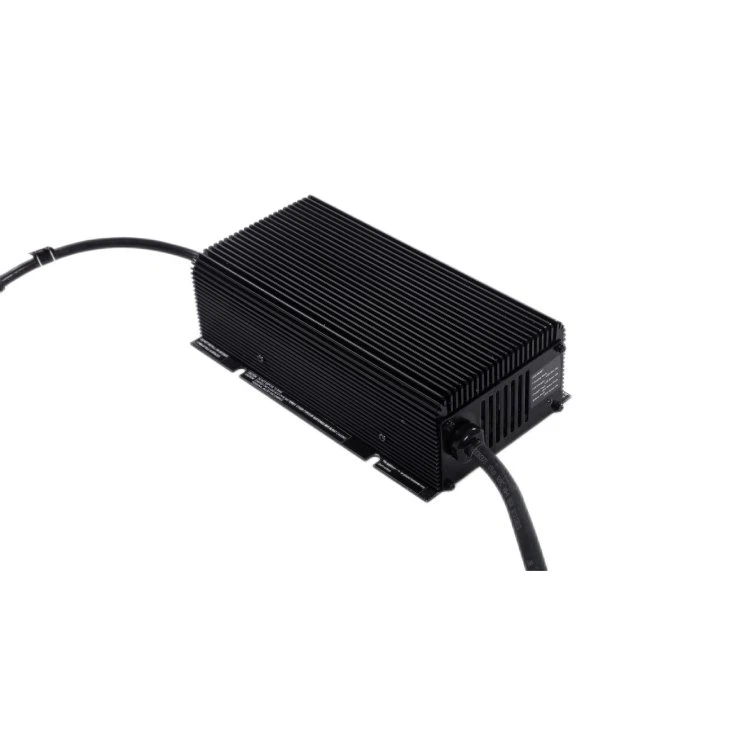
The first and most critical factor in determining whether a charger can be used for a particular battery is voltage compatibility. A charger must match the voltage of the battery it is intended to charge. For example, a 48V On Board Battery Charger is specifically designed to charge 48V forklift batteries. Using a charger with the wrong voltage can lead to overcharging or undercharging, which can significantly reduce the battery's lifespan and performance.
Capacity Compatibility
When it comes to capacity, the situation is more complex. In theory, a charger with a higher output current rating can charge a battery with a larger capacity, as long as the voltage is correct. However, this is not always a straightforward solution.
Charging Time
A charger with a lower current output will take longer to charge a high - capacity battery. For example, if you have a 100Ah battery and a charger with a 10A output, it will take approximately 10 hours to fully charge the battery (ignoring charging losses). If you try to use this charger to charge a 200Ah battery, it will take around 20 hours, which may not be practical for businesses with high - usage forklifts.
Overheating and Battery Damage
Using a charger with an excessive current output for a low - capacity battery can cause overheating. Overheating can lead to accelerated battery aging, electrolyte loss, and even thermal runaway, which is a dangerous condition that can result in battery failure or even explosion.

Chargers with Adjustable Settings
Some modern forklift battery chargers come with adjustable settings, which allow them to be used with different battery capacities to some extent. These chargers can be programmed to adjust the charging current and voltage based on the battery's specifications.
For example, a high - end charger may have the ability to charge both 100Ah and 200Ah 48V batteries. By adjusting the charging parameters, the charger can ensure that each battery is charged safely and efficiently. However, even these adjustable chargers have their limitations. There is usually a maximum and minimum capacity range within which the charger can operate effectively.
The Importance of Manufacturer Recommendations
Manufacturers of forklift batteries and chargers provide specific recommendations regarding charger - battery compatibility. These recommendations are based on extensive testing and research to ensure optimal performance and safety.
It is always advisable to follow the manufacturer's guidelines when selecting a charger for your forklift battery. Using a charger that is not recommended by the manufacturer can void the battery's warranty and may lead to premature battery failure.
Case Studies
Let's look at a few real - world examples to illustrate the impact of charger - battery compatibility.
Case 1: Using an Incompatible Charger
A small warehouse purchased a used forklift with a 48V, 150Ah battery. They decided to use an old 48V charger they had on - site, which was designed for a 100Ah battery. Initially, the battery seemed to charge, but after a few weeks, the battery started to overheat during charging. The electrolyte level dropped rapidly, and the battery's performance declined significantly. Eventually, the battery failed, and the warehouse had to replace it at a considerable cost.
Case 2: Using a Compatible Adjustable Charger
A large distribution center had a fleet of forklifts with different battery capacities, ranging from 100Ah to 250Ah, all with 48V batteries. They invested in a set of 48V On Board Battery Chargers that were adjustable. By programming the chargers according to the battery capacities, they were able to charge all their forklift batteries efficiently. This not only reduced charging time but also extended the battery lifespan, resulting in significant cost savings over time.
Conclusion
In conclusion, while it is possible to use a forklift battery charger for different battery capacities in some cases, it is not always advisable. Voltage compatibility is non - negotiable, and capacity compatibility requires careful consideration. Chargers with adjustable settings offer more flexibility, but they still have limitations.
As a forklift battery charger supplier, I always recommend that customers consult with us before making a purchase. We can provide expert advice on selecting the right charger for your specific battery requirements. Whether you need a 48V On Board Battery Charger, a 60V Battery Charger, or an 80V Battery Charger, we have a wide range of products to meet your needs.
If you are interested in learning more about our forklift battery chargers or have any questions regarding charger - battery compatibility, please feel free to contact us. Our team of experts is ready to assist you in making the best choice for your business.

References
- Battery University: A comprehensive resource for battery - related information, including charging techniques and battery types.
- Forklift Manufacturers' Manuals: Provide detailed information on forklift battery specifications and charger requirements.
- Industry Research Reports: Offer insights into the latest trends and best practices in forklift battery charging technology.


