


Wiring Harness
What is Wiring Harness
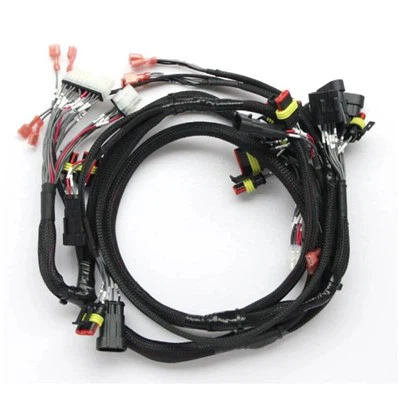
A cable harness, also known as a wire harness, wiring harness, cable assembly, wiring assembly or wiring loom, is an assembly of electrical cables or wires which transmit signals or electrical power.
Simplified Installation
Wiring harness are made pre-assembled, reducing the complexity of installation processes. This saves time and effort during assembly.
Improved Reliability
The structured bundling of wires and cables in a harness reduces the risk of loose connections, short circuits, and other electrical issues, enhancing overall system reliability.
Space Efficiency
Wiring harness are designed to fit specific spaces and configurations, optimizing the use of available space and promoting a neat and organized appearance.
Enhanced Durability
Wiring harness protect wires and cables from environmental factors such as abrasion, moisture, and vibration, thereby increasing the overall durability and lifespan of the electrical system.
Cost Savings
Although there may be an initial investment in manufacturing wiring harness, they often result in cost savings during installation and maintenance due to reduced labor and lower chances of errors.
Ease of Troubleshooting
The organized and labeled nature of wiring harness simplifies troubleshooting and maintenance tasks. Technicians can quickly identify and address issues without spending excessive time on diagnosis.
Standardization
Wiring harness facilitate standardization in manufacturing processes, ensuring consistency and quality across products. This can be particularly beneficial in mass production scenarios.
Improved Electrical Performance
Proper bundling and shielding of wires within a harness help minimize electromagnetic interference (EMI) and radio frequency interference (RFI), leading to improved electrical performance.
Time Savings
The plug-and-play nature of wiring harness speeds up assembly and installation processes, reducing production time and increasing overall efficiency.





Why Choose us
Cutting-edge technology
We are proud to announce that more than 30 patents and innovations have been introduced since our inception, with CE, TUV and UL safety guarantee standards.
Customer-focused
Our production capacity is 25,000-30,000 units per month, with expectations to increase in due time. We offer high-level technology, with the aim of maintaining performance levels for delivery of quality product and excellent customer experience.
Quality assurance
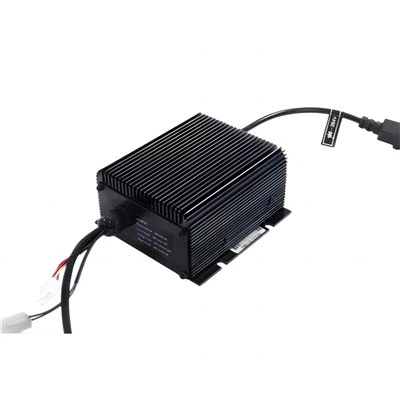
We can assure our customers that the chargers offered by our company fulfill environmental certifications and the safety standards, as well as the legal and technical requirements that have been made necessary by the European Union, the United States, and a few other countries.
The electronic contents inside an automobile are increasing day by day and posing newer challenges in terms of managing the wiring harnesses that connect them.
A wire harness is a specially designed system that keeps numerous wires or cables organized. It is a systematic and integrated arrangement of cables within an insulating material.
The purpose of the wiring assembly is to transmit a signal or electrical power. Cables are bound together with straps, cable ties, cable lacing, sleeves, electrical tape, conduit, or a combination thereof.
Rather than manually routing and connecting individual strands, the wires are cut to length, bundled, and clamped to the terminal or connector housing to form a single piece.
The wiring harness is created in two stages. It is designed in a software tool first and then the 2D and 3D layout is shared with manufacturing plants to build the harness.
The specific process of vehicle wiring harness design involves the following steps:
First, the electrical system engineer provides the functions of the entire electrical system, including the electrical load and related unique requirements. The state of the electrical equipment, the installation location, and the form of connection between the wiring harness and the electrical equipment are all key considerations
From the electrical functions and requirements provided by the electrical system engineer, the complete vehicle electrical schematic is created by adding components required for a function and connecting them together. The functions which are commonly used across multiple vehicles in an architecture platform are stored together.
After the schematic is defined, the wiring harness design is created. In one platform, the end customers can have a variety of requirements. It is very time-consuming and expensive if different designs are created for each end user's requirements separately. So, the designer takes care of the multiple variants while designing the wiring harness.
At the end, a 2D representation of all the wiring designs is created to show the way different wires are bundled and how the bundles are covered to secure the wires.
These designs can interact with 3D tools for the import and export of details. The wire lengths can be imported from the 3D tool and the end-to-end connection details are exported from the wiring harness tool to a 3D tool. The 3D tool uses these data to add passive components such as straps, cable ties, cable lacing, sleeves, electrical tape, and conduits in relevant locations and send them back to the wiring harness tool.

Point-to-Point Cable Bundles
The simplest type of wiring harness uses point-to-point cable bundles and packages them together into a single harness assembly. Cable bundles can be packed together using adhesives, tapes, sheathing, or mesh jackets. The cables used in these bundles could be off-the-shelf cables, custom cables, or a combination of these. Interconnect topology that usually arises from this is point-to-point because of the direct connections via these cables.
Bifurcated Cables
Cabling coming off of a connector can be bifurcated, where a single connector has wiring splitting off to two different destinations. This would be used to have a single receptacle on one PCB connecting to at least two other PCBs. This is a more sophisticated type of wiring harness that involves mixing and matching connectors and receptacles across different boards.
Flex Printed Circuit (FPC) Cable
Flex ribbons can also be used as wiring harnesses, which would allow a mix of edge connectors, surface mount connectors, and even through-hole connectors to interface with a group of PCBs. Flex connectors have an advantage and that they are very flat and so they may be useful in very low profile products. In some products, a wire bundle in a standard wiring harness simply won't fit in the design, so a flex cable becomes a very attractive option.
Automotive Applications: To simply starting an automobile, motorcycle, truck, tractor, and so on relies on a variety of electrical devices and electronic controls to transmit electrical power and signals to turn the engine over and execute ignition. The transmission of those electronic signals is part of a massive wiring network that allows vehicles to function. That functionality is accomplished through wire harness applications that merge the engine management system, electronic controls, lighting, air conditioning, power steering, electric windows, power brakes, entertainment, and audio system, and so on into an efficiently operating and functioning vehicle. With many electronic units on board, it's no wonder an average car has thousands of wires extending over a mile to connect operating systems and devices. Wire harnesses connect those devices and supply electricity and electronic signals throughout the vehicle.
Manufacturing: Complex wiring, networks, cabling systems and drive robotic and automated production and assembly lines in today's manufacturing facilities and plants. Wire harnessing applications connect signal and power conductors that control various systems along the same production line or within the same area. Wire harnesses ensure proper seal cabling, connectivity, and wires to ensure production is fully optimized.
Medical Applications: In the healthcare domain, electronic medical equipment, instruments, and devices are subject to heavy use and varying degrees of low and high intensity. The wire harness applications fixed in these devices must be durable, biocompatible, and adaptable. Whether the device is a radiological or imaging equipment, defibrillator, pacemaker, or drill, it must function efficiently on demand without failure. Because of the myriad of applications, wire harnesses for the medical and healthcare sector come in all sizes and shapes. They differ significantly from other wire harness assemblies used in different industries. Wire harnesses for medical applications must be bio-sensitive and comply with FDA regulatory controls and guidelines.
Communication Systems: Global connectivity demands an infrastructure that can send and receive data instantaneously worldwide. Communication systems depend on customized and personalized harnesses for a wide range of applications through an array of technologies. Wire harnesses are crucial components in the assembly of broadband networks, hubs, optical networks, routers, peripheral equipment, repeaters, modems, and much more. Wireless communication applications include RF, DSL routers, and satellite receivers.
Military Applications: Wire harness capabilities for any military application must meet stringent DoD (Department of Defense) specifications. Cabling and wiring used in military equipment are designed for applications subject to extreme environments and conditions. Wiring harness manufacturers in India must manufacture military wire harnesses with components—wires, connectors, terminals—specified and approved for demanding military applications.
Issues Caused by Faulty Wiring Harnesses
Engine Shutting Down
A corroded wiring harness can cause the engine to turn off. The damage could prevent electricity from reaching the ignition circuit, resulting in the engine getting little to no voltage to function.
Ignition Problems
Issues within the battery cables often cause ignition problems, as they connect the car battery to other electrical systems. If they're faulty, they might not deliver enough energy to power the engine.
Malfunctioning Electrical Parts
A damaged main harness can cause various electrical car components, such as the lights and dashboard, to malfunction. It could be because they're no longer getting enough electricity to work or receiving signals from the parts they depend on.
Electrical performance
The wiring harness must meet the electrical performance requirements of the system. This includes the voltage, current, and signal integrity. The wire gauge, insulation, and shielding must be selected to meet these requirements.
Environment
The wiring harness must be designed to withstand the environmental conditions in which it will operate. This includes factors such as temperature, humidity, vibration, and exposure to chemicals and other contaminants.
Durability
The wiring harness must be durable and able to withstand the rigors of its intended use. This includes selecting materials that are resistant to wear and tear, abrasion, and impact.
Serviceability
The wiring harness must be designed to be easily serviced and maintained. This includes the accessibility of the wires and connectors, the use of color coding and labeling, and the ease of replacing individual components.
Manufacturing
The wiring harness must be designed with manufacturability in mind. This includes the selection of components that are readily available, the use of standard connectors, and the simplification of the assembly process.
Cost
The wiring harness must be designed to meet the cost constraints of the project. This includes the selection of cost-effective materials and components, as well as the optimization of the design for efficient production.
Connector selection
The selection of the appropriate connectors is critical to the performance and reliability of the wiring harness. Factors such as the number of pins, mating cycle life, and current-carrying capacity should be considered when selecting connectors.
Wire selection
The selection of the appropriate wire size, type, and insulation material is essential to ensure that the wiring harness can handle the electrical load and environmental conditions it will be exposed to.
Routing and placement
The next factor to consider is the routing and placement of the wires and connectors. This includes ensuring that the wires are properly routed to minimize electrical losses and signal interference. The connectors should also be placed in a way that is easy to access and maintain.
Termination methods
The next factor to consider is the termination methods for the wires and connectors. This includes soldering, crimping, or insulation displacement. The termination method should be selected based on the type of wire and connector, as well as the electrical performance requirements.
Testing
The wiring harness should be tested to ensure that it meets the electrical performance requirements and environmental conditions. Testing can include electrical testing, continuity testing, and environmental testing.
Safety
Safety is a critical factor to consider when designing a wiring harness. The wiring harness should be designed to prevent electrical shock, fire hazards, and other safety risks.
Electromagnetic compatibility (EMC)
The wiring harness should be designed to minimize electromagnetic interference (EMI) and ensure that the system is compliant with EMC regulations.
Assembly
The wiring harness should be designed with assembly in mind. This includes selecting components that are readily available, using standard connectors, and designing the harness in a way that is easy to assemble.
Documentation
Finally, engineers should ensure that the wiring harness is thoroughly documented. This includes creating a detailed bill of materials (BOM), wiring diagrams, and other documentation that will be useful during manufacturing, testing, and maintenance.
Our Factory
As a professional technology company, we recognize the importance of research in ensuring optimal production and delivery so customer experiences and satisfaction could be enhanced. For this purpose, a 3,000 m2 research center has been established in our premises. We are proud to announce that more than 30 patents and innovations have been introduced since our inception, with CE, TUV and UL safety guarantee standards. The Industrial battery chargers, DC Convertors and all the above-mentioned equipment are produced by keeping in view the present day needs of our customers.


Asked Questions