


Battery Charger
What is Battery Charger
A battery charger, recharger, or simply charger, is a device that stores energy in an electric battery by running current through it. The charging protocol—how much voltage, current, for how long and what to do when charging is complete—depends on the size and type of the battery being charged.
Faster Charging Time
Lithium battery chargers offer significantly faster charging times compared to traditional lead-acid batteries. This means that forklift operators can spend less time waiting for their batteries to recharge and more time maximizing productivity.
Longer Battery Life
Batteries have a higher energy density and charge cycles, leading to longer battery life. This reduces battery replacement costs and increases reliability for your forklift fleet.
Energy Efficiency
Forklift battery chargers are more energy-efficient than their lead-acid counterparts. These chargers reduce energy costs and contribute to a greener work environment by consuming less energy during charging.
Compact and Lightweight Design
Lithium batteries’ compact and lightweight design makes them easier to maneuver and handle during battery replacement or maintenance. This can help reduce the risk of employee injury and minimize warehouse downtime.
Low Maintenance
Lithium batteries are virtually maintenance-free, Unlike traditional lead-acid batteries, which require consistent maintenance and water level checks. This saves time and labor costs for warehouse operators, allowing them to focus on other essential tasks.
Greater Stability and Reliability
Lithium batteries ensure efficient and smooth forklift operation with a consistent voltage output. The advanced battery management systems (BMS) in lithium chargers also protect the battery from overcharging, overheating, and short-circuiting.
Improved Workplace Safety
Lithium battery chargers help create a safer work environment by eliminating the risk of acid spills associated with conventional batteries. These chargers also produce minimal harmful gases during the charging process, thus reducing air pollution and potential health risks for employees.
Environmentally Friendly
Lithium battery chargers have a lower environmental footprint due to their longer lifespan, high energy efficiency, reduced waste generation, and lower greenhouse gas emissions.
Opportunity Charging
The capability of lithium batteries to be partially recharged during work breaks without reducing overall battery life allows for increased flexibility and extended operation hours.
High Return on Investment
Though the initial investment in lithium battery chargers may be higher than traditional chargers, the long-term benefits of reduced maintenance and replacement costs, lower energy expenses, and increased productivity contribute to a faster return on investment.


Why Choose us
Cutting-edge technology
We are proud to announce that more than 30 patents and innovations have been introduced since our inception, with CE, TUV and UL safety guarantee standards.
Customer-focused
Our production capacity is 25,000-30,000 units per month, with expectations to increase in due time. We offer high-level technology, with the aim of maintaining performance levels for delivery of quality product and excellent customer experience.
Quality assurance
We can assure our customers that the chargers offered by our company fulfill environmental certifications and the safety standards, as well as the legal and technical requirements that have been made necessary by the European Union, the United States, and a few other countries.
Now that we understand lithium-ion batteries vs lead acid, when it comes to comparing lithium-ion and lead-acid battery chargers, there are several key differences to consider.
One of the most obvious differences is the type of battery each charger is designed to charge. Lead acid battery chargers are specifically designed to charge and maintain lead acid batteries, while lithium-ion battery chargers are designed to charge and maintain lithium-ion batteries.
Another important difference is the charging method. Lead acid battery chargers typically deliver a constant voltage charge, while lithium-ion battery chargers typically deliver a constant current and constant voltage charge. This means that lithium-ion battery chargers are more efficient and can charge faster than lead-acid battery chargers.
In terms of safety, lithium-ion battery chargers often have built-in protection against overcharging and overheating, while lead-acid battery chargers typically have a built-in thermal sensor to detect overheating.
Additionally, Lithium-ion battery chargers are UL listed, meaning that they have met safety standards set by Underwriters Laboratories, while Lead acid battery chargers are UL recognized, meaning that they conform to UL standards but have not been evaluated by UL. If you want to learn more about UL-listed vs. UL-recognized, we have a detailed guide on the topic.
Weight and size are also key differences between the two types of chargers, with lithium-ion battery chargers being much lighter and smaller than lead acid battery chargers. This makes lithium-ion battery chargers more portable and suitable for use in a wide range of applications such as laptops, smartphones, and electric vehicles.
In terms of cost, lead acid battery chargers are typically less expensive than lithium-ion battery chargers. However, the overall cost of ownership for a lithium-ion battery charger may be lower due to its long lifespan, higher efficiency, and less maintenance required.
How To Choose The Correct Battery Charger
Identify the battery type
There are many types of batteries but most commonly in an automotive or recreational setting you will find Lithium, AGM (Absorbed Glass Matt), GEL, flooded or wet batteries, maintenance free Calcium batteries and the more modern EFB (Enhanced Flooded Battery) and Automotive AGM found in modern Stop Start vehicles. The type of battery is always clearly displayed on the battery label located on the top or side of the battery.
Most automotive cranking batteries are either flooded (wet) batteries or Calcium maintenance free batteries. Always check, as some modern vehicles have an AGM style Stop/Start cranking battery. It is important to check your charger is suitable for your battery type and select the correct battery chemistry when charging.
Identify the size of the battery you need to charge
The rating of batteries can be confusing and different rating types are used for different batteries. For example:
Flooded (Wet) or Calcium are typically rated in Cold Cranking Amps (CCA) and/or Reserve Capacity (RC).
Lithium, AGM and GEL batteries are typically rated by a “C” Rating
When it comes to charging, we need to determine the Ampere hours (Ah) of the battery. This is a universal number that helps us understand the size or electrical capacity of a battery. On flooded, wet or Calcium batteries such as start batteries the Ah is often not displayed.
Converting CCA to Ah is not that easy. You should always download the manufactures data sheet to check the correct Ah rating. There is an old rule of thumb where you divide 7.25 into the CCA to determine the Ah of the battery but it's not always an accurate conversion.
Identify what you need the charger for
Battery charging is when you are recharging a flat or dead battery to full. Battery maintenance on the other hand is when you just want to keep a battery topped up (maintained).
For instance, if you're storing a motorcycle that you only ride a few times a month but want to ensure it's ready to go on a sunny afternoon you would require battery maintenance as opposed to battery charging. This is often referred to as trickle charging.
Selecting a charger size
As a rule of thumb your battery charger should be 10% - 20% of the Ah rating of the battery.
E.g A 100Ah battery would require a 10 Amp charger as a minimum. To prevent overcharging, you should keep the charger size to within 30% of the total capacity.
In the case of a 100Ah battery that would be a maximum of a 30 amp charger. (For Lithium batteries, refer to your battery manufacturers specifications for maximum charge current as this could be anywhere up to 100% of the Ah capacity)
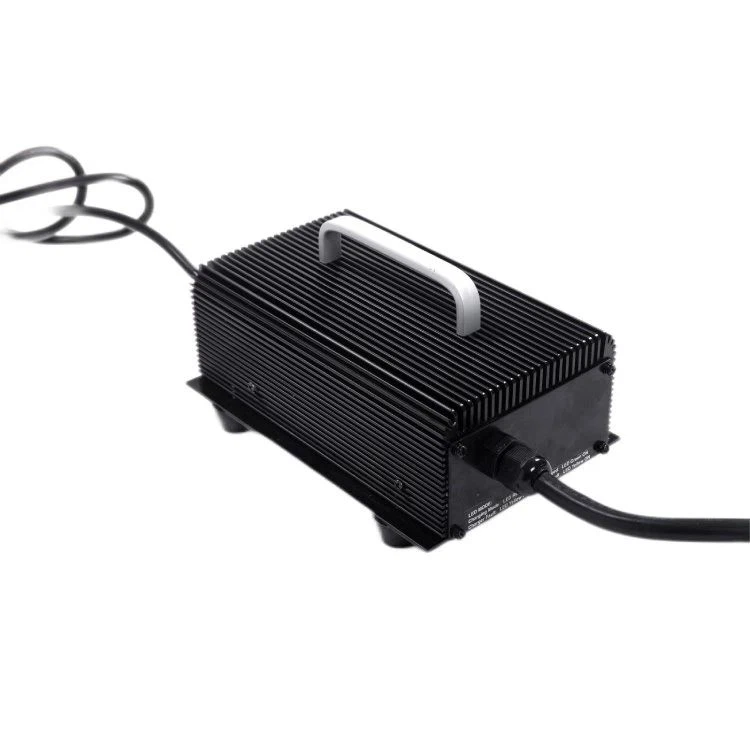
Connect the charger to the socket: First, plug the charger into the socket. The socket /will supply electrical energy to the charger.
Transformer: A transformer is present in the charger. This transformer converts the alternating voltage to the appropriate levels. Now, the battery charger can work properly at a suitable voltage level.
Conversion of AC to DC: In most circumstances, the electrical energy provided to the socket is alternating voltage. A charger contains the rectifier. This alternating current is rectified to direct current.
Voltage Regulation: This Direct Current passes through the voltage regulator. The voltage regulator regulates the voltage to the correct levels. In this way, it ensures safe charging.
Connection to a Battery: After that, the battery charger supplies DC electricity to the battery. The battery stores this energy. Hence, the battery recharges and can be used again.
Regular Inspection and Cleaning
● Inspect regularly: As a general rule, conduct regular inspections of chargers and batteries to spot potential problems, such as loose connections or damaged cables. Minor issues can worsen, leading to more significant problems if not addressed promptly.
● Clean frequently: Dirt, dust, and grime can facilitate electrical shorts and lead to potential problems. Clean the chargers, connectors, and cables using manufacturer-approved cleaning solutions or a mixture of baking soda and water.
Correct Usage
● Follow manufacturer recommendations: Always comply with instructions given by the manufacturer for proper usage and maintenance. This ensures optimum performance and maximum lifespan.
● Avoid opportunity charging: This is the practice of charging batteries whenever there's spare time, which can degrade the overall lifespan of batteries. Stick to a regular and well-planned charging schedule.
Proper Ventilation and Environment
● Ensure proper ventilation: The charging process generates heat. Excessive heat build-up can affect battery performance and charger lifespan without adequate ventilation. Large warehouses or dedicated charging rooms are recommended.
● Maintain optimal temperature conditions: Optimum battery charger performance is typically achieved between 50°F (10°C) and 85°F (29°C). Extreme heat or cold can affect the performance and lifespan of the charger and battery alike.
Regular Maintenance
● Periodic professional inspections: Sometimes, visual checks won't detect technical problems. Hence, semi-annual or annual professional inspections are recommended.
● Keep records for preventive maintenance: A detailed record helps identify recurring problems and undertake the proper preventative measures.
Trained Operators
Guided training for operators: Misuse can damage the battery charger and the battery. Ensure that operators know the charger's proper usage and maintenance practices.
Proper Shutdown and Storage
● Shut down correctly: Always switch off chargers before disconnecting the battery. This helps to prevent arcing or short circuits.
● Safe storage: When not in use, store your battery chargers in a cool, dry place to prevent potential damage from moisture or excessive heat.
By adhering to these best practices, you can optimize the functionality and lifespan of your forklift battery chargers. It also helps minimize downtime and reduces the costs associated with repairs and replacements. A well-maintained charger is instrumental to your lift trucks' smooth and efficient operation.
Regular Software Updates
Update frequently: Like other tech tools, battery chargers often have software that needs updating. Regular updates help optimize the charger for current conditions and improve its efficiency.
Appropriate Protective Gear
Use protective equipment: Due to potential electrical hazards, anyone maintaining forklift battery chargers should use appropriate personal protective equipment (PPE). This can include protective gloves, safety goggles, and electrical safety shoes.
Maintain Charger Cables
Inspect cables: The cables of a charger are one of its most vulnerable parts. Regularly check the wires for cracks, wear and tear, grounding, and insulation integrity. Replace any damaged cords immediately.
Correct Personal Practices
● Avoid multitasking: While performing maintenance, avoid distractions and focus on multiple tasks. Bad connections, incorrectly plugged cables, or inattentive to other issues might lead to severe equipment damage.
● Don't neglect minor problems: Consider minor issues like unusual sounds, unexpected heating, or other discrepancies. Minor problems can often lead to significant consequences if left unaddressed.
Implement Charger Rotation
Regular Charger Rotation: If you have multiple battery chargers in a fleet environment, practice a regular rotation. This helps distribute wear and tear evenly across all chargers, thus elongating their service life and reliability.
Our Factory
As a professional technology company, we recognize the importance of research in ensuring optimal production and delivery so customer experiences and satisfaction could be enhanced. For this purpose, a 3,000 m2 research center has been established in our premises. We are proud to announce that more than 30 patents and innovations have been introduced since our inception, with CE, TUV and UL safety guarantee standards. The Industrial battery chargers, DC Convertors and all the above-mentioned equipment are produced by keeping in view the present day needs of our customers.


Asked Questions