

What is the charging speed of a portable battery charger?
In today's fast - paced world, the demand for portable battery chargers has skyrocketed. From powering our smartphones on the go to keeping essential equipment operational in remote locations, these chargers have become indispensable. As a leading supplier of battery chargers, we understand the importance of charging speed, and in this blog, we'll delve deep into what determines the charging speed of a portable battery charger.
Understanding the Basics of Charging Speed
The charging speed of a portable battery charger is primarily measured in terms of the rate at which it can transfer electrical energy to a device's battery. This is typically expressed in amperes (A) or milliamperes (mA). For example, a charger with an output of 1A can supply 1 ampere of electrical current to a device, while a 2A charger can supply twice that amount.
The voltage of the charger also plays a crucial role. Most portable chargers operate at a standard voltage of 5V for charging mobile devices like smartphones and tablets. However, some chargers support higher voltages to achieve faster charging. For instance, Quick Charge technology used by many modern chargers can increase the voltage to 9V or even 12V, allowing for a much quicker energy transfer.

Factors Affecting Charging Speed
- Battery Capacity: The capacity of the device's battery is a significant factor. A larger - capacity battery, measured in milliampere - hours (mAh), will take longer to charge compared to a smaller one. For example, a smartphone with a 5000mAh battery will take more time to charge fully than a phone with a 3000mAh battery, assuming the same charging current.
- Charger Output: As mentioned earlier, the output current and voltage of the charger are directly related to the charging speed. A charger with a higher output current can charge a device faster. For instance, a 2.4A charger will charge a compatible device faster than a 1A charger.
- Device Compatibility: Not all devices can accept high - current charging. Some older devices or those with lower - spec charging circuits may only be able to handle a limited amount of current. Even if you use a high - output charger, the device will only draw the amount of current it can safely handle. For example, an older smartphone may only support 1A charging, so using a 2A charger won't make it charge any faster.
- Cable Quality: The quality of the charging cable also affects the charging speed. A poor - quality cable may have higher resistance, which can lead to energy loss and slower charging. High - quality cables with thicker wires and better insulation can minimize resistance and allow for more efficient energy transfer.
Different Types of Portable Battery Chargers and Their Charging Speeds
- Smartphone Chargers: Most standard smartphone chargers have an output of 1A - 2.4A. These chargers can charge a typical smartphone battery from 0% to 100% in about 1 - 3 hours, depending on the battery capacity and the charger's output. However, with the advent of fast - charging technologies like Qualcomm Quick Charge and USB Power Delivery (USB - PD), some smartphones can now be charged to 50% or more in just 30 minutes.
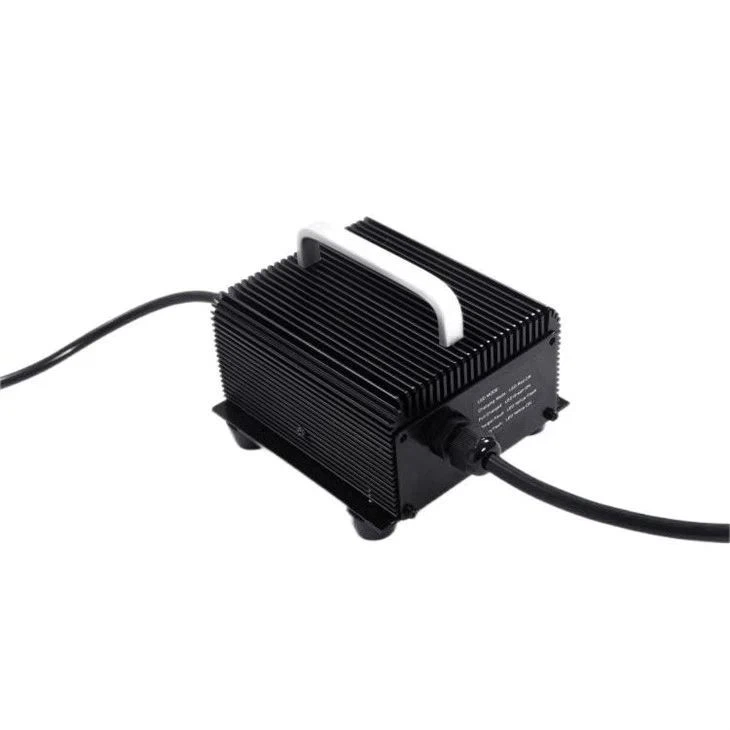
- Portable Forklift Battery Chargers: Forklifts rely on large - capacity batteries to operate. Portable Forklift Battery Chargers are designed to recharge these batteries efficiently. The charging speed of a portable forklift battery charger can vary widely depending on the charger's power rating and the battery's capacity. Some high - power chargers can fully charge a forklift battery in a few hours, while others may take 8 - 10 hours or more.
- Golf Cart Battery Chargers: Golf carts also use large batteries, and Trickle Charge Golf Cart Battery chargers are used to keep them charged. Trickle charging is a slow and steady method that can take a long time, but it helps maintain the battery's health. Fast - charging options for golf cart batteries are also available, which can significantly reduce the charging time.
Measuring and Comparing Charging Speeds
To measure the charging speed of a portable battery charger, you can use a simple stopwatch. Start the stopwatch when you begin charging the device and stop it when the device reaches a certain charge level, such as 50% or 100%. You can then calculate the average charging rate by dividing the amount of charge added by the time taken.
When comparing different chargers, it's important to look at the charger's specifications, including the output current and voltage. You should also consider the device's compatibility and the type of charging technology it supports. Reading user reviews can also give you an idea of how fast a particular charger can charge a device in real - world scenarios.
Improving Charging Speed
- Use a High - Quality Charger: Investing in a high - quality charger with a higher output current and voltage can significantly improve charging speed. Make sure the charger is compatible with your device.
- Opt for Fast - Charging Technology: If your device supports fast - charging technologies like Quick Charge or USB - PD, use a charger that is compatible with these technologies.
- Keep the Device Cool: Charging a device generates heat, and high temperatures can slow down the charging process and even damage the battery. Try to keep the device in a cool environment while charging.
The Future of Charging Speed
The future of portable battery chargers looks promising in terms of charging speed. Researchers are constantly working on developing new battery chemistries and charging technologies that can charge devices even faster. For example, some companies are exploring the use of solid - state batteries, which have the potential to charge much faster than traditional lithium - ion batteries.
Wireless charging is also evolving rapidly, and future wireless chargers may be able to provide charging speeds comparable to or even faster than wired chargers. As technology advances, we can expect to see portable battery chargers that can charge our devices in a matter of minutes rather than hours.
Conclusion
As a supplier of battery chargers, we are committed to providing our customers with chargers that offer the best possible charging speed. Whether you need a charger for your smartphone, a Portable Forklift Charger for your industrial equipment, or a charger for your golf cart, we have a wide range of products to meet your needs.
If you're interested in purchasing our high - quality battery chargers or have any questions about charging speed and our products, we invite you to contact us for a detailed discussion. Our team of experts is ready to assist you in finding the perfect charger for your requirements.
References
- "Battery Charging Basics" by Battery University
- "Understanding Charging Technologies" in the Journal of Electrical Engineering


