

Hey there! As a supplier of 12V 5A battery chargers, I often get asked about the efficiency of these chargers. So, let's dive right in and break it down.

First off, what do we mean by "efficiency" when it comes to a battery charger? In simple terms, efficiency is a measure of how well the charger can convert the electrical energy it draws from the power source into the energy that actually goes into charging the battery. It's usually expressed as a percentage.
Let's start with the basics of our 12V 5A battery charger. The "12V" indicates the output voltage of the charger, which means it's designed to charge batteries that operate at 12 volts. The "5A" stands for the output current, which tells us how much electrical current the charger can supply to the battery.
Now, when we talk about efficiency, we're looking at the ratio of the power output (the energy going into the battery) to the power input (the energy drawn from the wall socket). There are a few factors that can affect the efficiency of a 12V 5A battery charger.
One major factor is the type of components used in the charger. High - quality components, like efficient transformers and rectifiers, can significantly improve the charger's efficiency. For example, a charger with a well - designed transformer can reduce energy losses due to heat generation. On the other hand, cheaper components might lead to more energy being wasted as heat, thus lowering the overall efficiency.
Another factor is the charging process itself. Chargers usually have different charging stages. When the battery is almost empty, the charger might supply a constant current to quickly charge it up. As the battery gets closer to full, the charger switches to a constant - voltage mode to prevent overcharging. The transition between these stages needs to be smooth and well - controlled. If not, it can result in energy losses and a decrease in efficiency.
Typically, a good 12V 5A battery charger can have an efficiency ranging from 80% to 90%. That means if the charger draws 100 watts of power from the wall socket, between 80 and 90 watts of that power will actually be used to charge the battery, and the rest will be lost as heat.
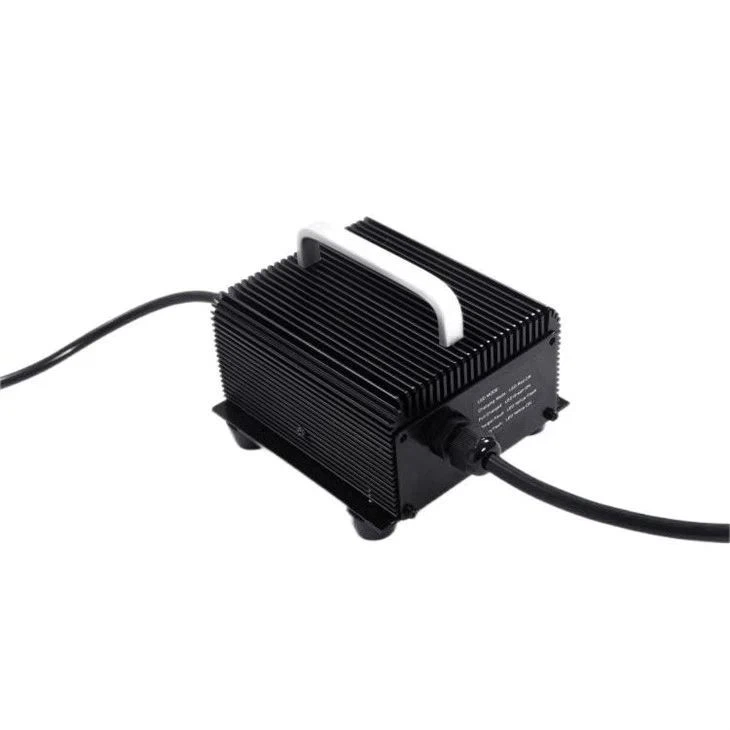
Why does efficiency matter? Well, for one thing, a more efficient charger will cost you less to operate in the long run. If you're using the charger frequently, say in an industrial setting or for a fleet of vehicles, the savings on electricity bills can add up over time. Also, an efficient charger runs cooler, which can extend its lifespan and reduce the risk of malfunctions.
Now, as a supplier, we take great pride in the quality and efficiency of our 12V 5A battery chargers. We use the latest technology and high - grade components to ensure that our chargers offer optimal performance. But we also understand that different customers have different needs. That's why we offer a range of other chargers as well.
For instance, if you're looking for a charger with a higher voltage, we have the 24V Portable Battery Charger. This charger is perfect for applications that require a 24 - volt power source. It's portable, so you can take it with you wherever you need it.
If you need a charger with a higher current output, check out our 24V15A Battery Charger With Handle. The handle makes it easy to carry around, and the 15A output can charge your 24 - volt batteries much faster.

And for those in the industrial sector, especially for forklifts, we offer the Portable Industrial Battery Charger For Forklift. This charger is built tough to withstand the rigors of industrial use.
When it comes to choosing a battery charger, it's not just about the efficiency. You also need to consider factors like the battery type (lead - acid, lithium - ion, etc.), the charging speed you need, and the overall durability of the charger. But efficiency is definitely a key factor that can save you money and give you peace of mind.
If you're in the market for a 12V 5A battery charger or any of our other chargers, I encourage you to get in touch with us. We're always happy to answer your questions and help you find the right charger for your needs. Whether you're a small business owner, a DIY enthusiast, or an industrial operator, we've got a charger that's perfect for you. So, don't hesitate to reach out and start a conversation about your battery - charging requirements.

References:
- Battery Charger Handbook: A Guide to Understanding and Selecting Battery Chargers.
- Electrical Engineering Textbooks on Power Electronics and Battery Charging Technology.


