

Hey there, fellow EV enthusiasts! I'm here today to talk about a question I get asked a lot: "How long does it take to fully charge an electric vehicle with a 2.2KW EV charger?" As a supplier of 2.2KW EV chargers, I've got some insights to share with you.
First off, let's understand what a 2.2KW EV charger is. It's a relatively low - power charger, often used in home settings or for slower charging needs. Compared to higher - power chargers, it won't give you that super - fast top - up, but it has its own advantages, like being more affordable and easier on the electrical system of your home.
Now, the time it takes to fully charge an EV with a 2.2KW charger depends on a few key factors. The most important one is the battery capacity of your electric vehicle. Battery capacity is usually measured in kilowatt - hours (kWh). For example, if your EV has a 22 kWh battery, and you're using a 2.2KW charger, you can do a simple calculation to estimate the charging time.
The formula for calculating charging time is: Charging time (hours)=Battery capacity (kWh)/Charger power (KW). Using our example of a 22 kWh battery and a 2.2KW charger, the calculation would be 22 kWh / 2.2 KW = 10 hours. So, in an ideal situation, it would take about 10 hours to fully charge that EV.
But hold on, it's not always that straightforward. In real - world scenarios, there are other factors that can affect the charging time. One big factor is the state of charge of the battery when you start charging. Most modern EV batteries use a charging profile that slows down the charging rate as the battery approaches full capacity. This is done to protect the battery and extend its lifespan. So, if you start charging your battery when it's almost empty, the initial charging might be at a relatively fast rate, but as it gets closer to 100%, the rate will drop.
Another factor is the efficiency of the charger and the battery. No charger is 100% efficient. There are always some energy losses during the charging process, which means that the actual amount of energy going into the battery is a bit less than the power output of the charger. Typically, charger efficiency can range from about 85% to 95%. So, if your charger has an efficiency of 90%, for every 2.2 KW of power it draws from the grid, only about 1.98 KW actually goes into charging the battery. This will increase the overall charging time.
Let's look at some different EV models and their typical charging times with a 2.2KW charger. A smaller, city - friendly EV with a battery capacity of around 15 kWh might take about 6.8 - 7 hours to charge from empty to full (assuming an average charger efficiency). On the other hand, a larger, long - range EV with a 60 kWh battery could take upwards of 27 - 30 hours.
Now, you might be thinking, "That's a long time! Are there any alternatives?" Well, we also offer other types of chargers that can get your EV charged up faster. For instance, our 3.3KW EV Charger can cut down the charging time significantly. Using the same formula as before, a 22 kWh battery would take about 6.7 hours to charge with a 3.3KW charger instead of 10 hours with a 2.2KW charger.
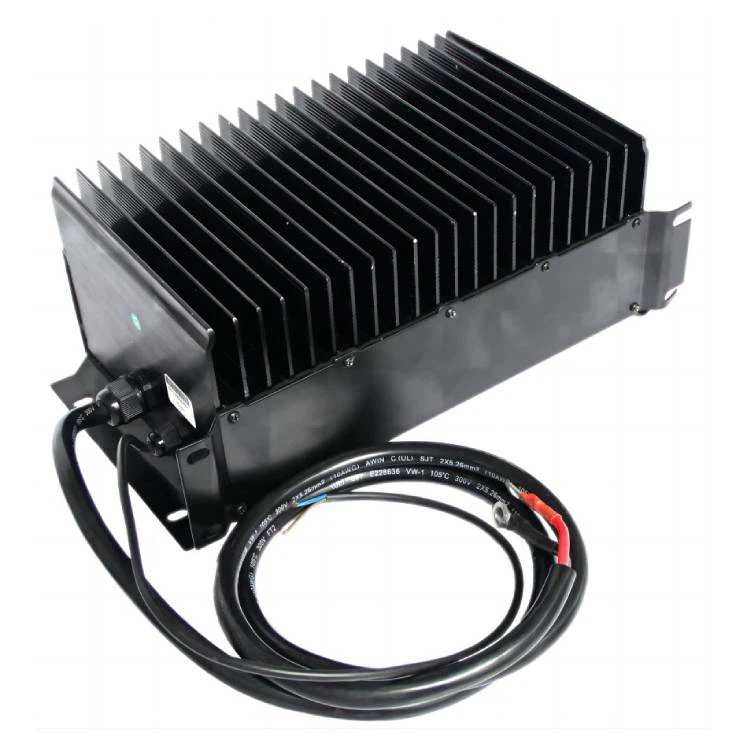

If you're looking for something more industrial - grade, we have the EV Industrial Battery Charger. This charger is designed for heavy - duty use and can handle larger battery capacities and higher charging demands.
And for those of you who are always on the go and need a charger you can take with you, our Portable Car Battery Charger is a great option. It might not be as powerful as some of the other chargers, but it gives you the flexibility to charge your EV wherever you are.
So, to sum it up, the time it takes to fully charge an EV with a 2.2KW charger can vary widely depending on the battery capacity of your vehicle, the state of charge when you start, and the efficiency of the charger and battery. It can range from a few hours for a small - battery EV to over a day for a large - battery one.
If you're in the market for an EV charger, whether it's the 2.2KW charger we've been talking about or one of our other options, we'd love to have a chat with you. We can help you figure out which charger is the best fit for your needs and your vehicle. Just reach out to us, and we'll start the conversation. We're here to make sure you get the most out of your electric vehicle charging experience.
References:
- "Electric Vehicle Battery Technology" - Journal of Automotive Engineering
- "Charging Strategies for Electric Vehicles" - International Journal of Sustainable Transportation


