Hey there! As a supplier of 24V forklift chargers, I often get asked about the communication interfaces of these chargers. So, I thought I'd write a blog post to share some insights on this topic.
First off, let's understand why communication interfaces are important in a 24V forklift charger. In today's tech - savvy world, having a good communication interface allows for better monitoring, control, and integration of the charger with other systems. It can help operators and maintenance crews keep an eye on the charging process, diagnose issues quickly, and even optimize the charging cycle for longer battery life.
One of the most common communication interfaces you'll find in 24V forklift chargers is the CAN (Controller Area Network) bus. The CAN bus is a robust and reliable communication protocol that's widely used in the automotive and industrial sectors. It allows multiple devices to communicate with each other over a single pair of wires. In the context of a forklift charger, the CAN bus can be used to transmit data such as charging status (like current charge level, charging time remaining), fault codes, and temperature readings. This data can then be accessed by the forklift's on - board computer or a remote monitoring system. For example, if there's an over - temperature issue during the charging process, the charger can send a fault code via the CAN bus, and the forklift operator or maintenance team can be alerted immediately.
Another popular communication interface is the RS - 232 or RS - 485. RS - 232 is a serial communication standard that's been around for a long time. It's relatively simple and easy to implement. You can use an RS - 232 connection to connect the charger to a PC or a handheld device for configuration and data retrieval. For instance, you can use a laptop with special software to adjust the charging parameters of the 24V forklift charger, like the charging current and voltage limits. RS - 485, on the other hand, is a more advanced version of serial communication. It can support longer cable lengths and multiple devices on the same bus. This makes it suitable for larger forklift fleets where you might want to connect multiple chargers to a central monitoring system.
Some of our 24V forklift chargers also come with Ethernet interfaces. Ethernet offers high - speed data transfer and is well - suited for network - based applications. With an Ethernet interface, you can integrate the charger into a local area network (LAN) or even connect it to the internet. This enables remote access and control of the charger from anywhere in the world, as long as there's an internet connection. You can monitor the charger's performance in real - time, receive notifications via email or SMS, and even perform software updates remotely. For example, if you manage a large warehouse with multiple forklifts, you can use an Ethernet - enabled charger to keep track of all the charging activities from your office computer.
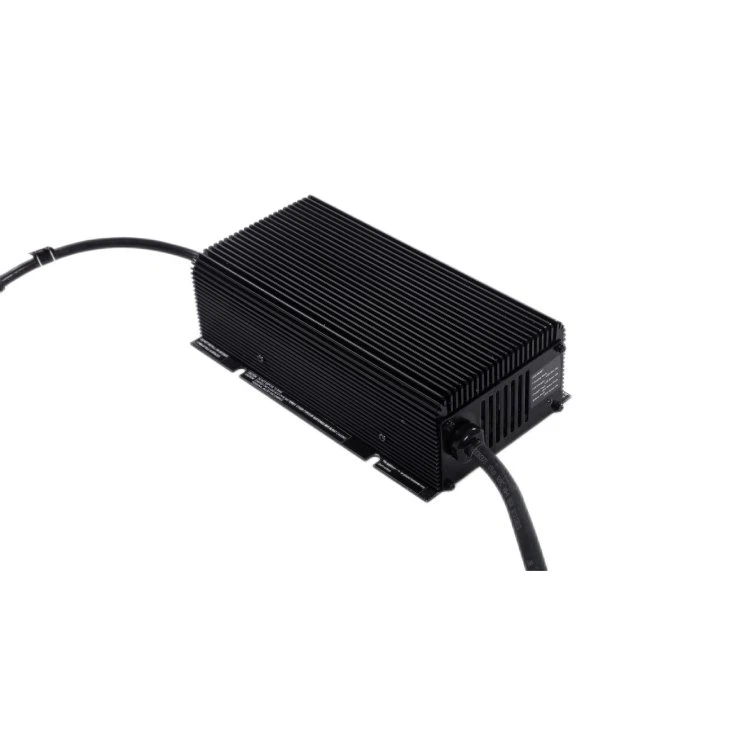
Now, let me tell you a bit about our product range. We offer a great selection of 24V Series Forklift Battery Charger. These chargers are designed with the latest technology and high - quality components to ensure reliable and efficient charging. They come with different communication interfaces, so you can choose the one that best fits your needs.
If you're looking for something with a higher voltage, we also have 48V On Board Battery Charger and 80V Battery Charger. These chargers are built with the same attention to detail and quality as our 24V chargers, and they also support various communication interfaces for seamless integration into your forklift system.

When it comes to choosing the right communication interface for your 24V forklift charger, there are a few things to consider. First, think about the size of your forklift fleet. If you have just a few forklifts, a simple RS - 232 connection might be sufficient for basic monitoring and configuration. But if you have a large fleet, you'll probably want to go for a more advanced interface like CAN bus or Ethernet for centralized management.
Second, consider the level of integration you need. Do you want the charger to communicate with the forklift's on - board computer, a remote monitoring system, or other equipment in your warehouse? Make sure the communication interface you choose is compatible with the other systems you're using.
Finally, think about the future. As technology evolves, you might want to add more features and functionality to your charging system. So, choose a charger with a communication interface that's flexible and can support future upgrades.
In conclusion, the communication interface of a 24V forklift charger plays a crucial role in its performance and usability. Whether it's the reliable CAN bus, the simple RS - 232, or the high - speed Ethernet, each interface has its own advantages. At our company, we're committed to providing high - quality chargers with the right communication interfaces to meet your specific needs.
If you're interested in our 24V forklift chargers or have any questions about the communication interfaces, don't hesitate to reach out. We're here to help you make the best choice for your forklift charging needs. Whether you're a small business owner with a couple of forklifts or a large logistics company with a big fleet, we've got the right solution for you. Let's have a chat and see how we can work together to keep your forklifts running smoothly!
References:
- Various industry reports on forklift charger technology
- Manufacturer's manuals for different forklift chargers